Florida's intense sun, humidity, and storms demand special attention when painting your home's exterior. Learn about the best paints, prep techniques, color choices, and how often to repaint in Northeast Florida.
Why Exterior Paint Is Your Home's First Line of Defense in Florida
In Florida, exterior paint does far more than make your home look good. It is a protective barrier that shields your home's siding, trim, and structural components from some of the harshest conditions any building exterior can face. Jacksonville averages over 2,900 hours of sunshine per year, delivering intense UV radiation that breaks down unprotected surfaces at an accelerated rate. The combination of heat, humidity that regularly exceeds 80 percent, torrential rain, salt air near the coast, and occasional hurricanes creates a punishing environment for any exterior coating. When exterior paint fails — cracking, peeling, chalking, or fading — it exposes the underlying substrate to moisture infiltration. In Florida's climate, moisture in wood leads to rot and termite attraction remarkably quickly. Moisture in stucco leads to cracking and efflorescence. Moisture behind any siding material can cause mold growth that affects both the structure and indoor air quality. A quality exterior paint job is not just cosmetic maintenance. It is structural maintenance that prevents far more expensive repairs down the road. Regular repainting on the proper schedule protects your investment and maintains your home's curb appeal, which directly affects property value in Jacksonville's active real estate market. Homes with fresh, well-maintained exteriors sell faster and for higher prices than homes with peeling paint and faded trim, regardless of the interior condition.
Choosing the Best Exterior Paint for Florida's Climate
Not all exterior paints perform equally in Florida's demanding climate, and choosing the right product is critical for longevity. The best exterior paints for Florida share several key characteristics that standard paints may lack. One hundred percent acrylic latex paint is the gold standard for Florida exteriors. Acrylic latex adheres well to all common substrates including wood, stucco, fiber cement, and previously painted surfaces. It expands and contracts with temperature changes without cracking, resists moisture penetration while allowing water vapor to escape from inside the wall, and maintains color and sheen far longer than oil-based or vinyl-acrylic alternatives under UV exposure. Premium paint lines from major manufacturers like Sherwin-Williams, Benjamin Moore, and Behr all offer exterior products specifically formulated for harsh climates with enhanced UV stabilizers, mildewcides, and flexibility. These premium products cost more per gallon than builder-grade paint but deliver dramatically longer service life, making them more economical over time. Sheen selection affects both appearance and performance. Flat and matte finishes hide surface imperfections on stucco and older siding but are more difficult to clean and less resistant to mildew. Satin finish is the most popular choice for siding because it balances good looks with cleanability and durability. Semi-gloss is reserved for trim, shutters, doors, and accent elements where its higher sheen highlights architectural details and provides maximum moisture resistance. One critical requirement for Florida exterior painting is mildewcide additive. Even premium paints benefit from additional mildewcide mixed in at the paint store. Florida's combination of humidity, warmth, and shade from landscaping creates ideal conditions for mildew growth on exterior paint surfaces, and the added protection is worth the small additional cost.
Surface Preparation: The Key to a Long-Lasting Exterior Paint Job
Surface preparation accounts for approximately 60 to 70 percent of the work in a quality exterior paint job, and it is the single biggest factor determining how long the paint will last. Skipping or shortcutting prep is the primary reason cheap paint jobs fail within two to three years while proper jobs last eight to twelve years in Florida's climate. The process begins with a thorough inspection of every exterior surface. We identify peeling paint, cracking, wood rot, failing caulk, mildew, stains, and any structural damage that needs repair before painting. All issues must be addressed — painting over problems only hides them temporarily while allowing damage to worsen underneath. Pressure washing is the next critical step. Using professional equipment with appropriate pressure settings for each surface type, we remove dirt, mildew, chalking paint residue, and loose material. Stucco requires lower pressure to avoid damage, while wood and fiber cement can tolerate slightly higher settings. After washing, surfaces must dry completely — typically 48 to 72 hours in Florida humidity — before any paint is applied. Scraping and sanding removes all remaining loose and peeling paint, creating a sound surface for new paint to adhere to. We scrape all areas where paint has lost adhesion, feather-sand the edges where old paint meets bare substrate to create smooth transitions, and sand glossy surfaces to provide tooth for the new paint to grip. Caulking all joints, gaps, and cracks with premium exterior caulk prevents water infiltration at the most vulnerable points — where trim meets siding, around windows and doors, and at any penetration through the exterior surface. We use polyurethane or advanced hybrid caulks that remain flexible for decades, not cheap latex caulk that dries out and cracks in Florida's sun within a few years. Priming bare wood, bare stucco, repaired areas, and stain-prone surfaces with an appropriate primer ensures proper adhesion and blocks stain bleed-through. A bonding primer is used over glossy surfaces or previously chalked paint to ensure the topcoat adheres properly.
Exterior Color Selection for Florida Homes
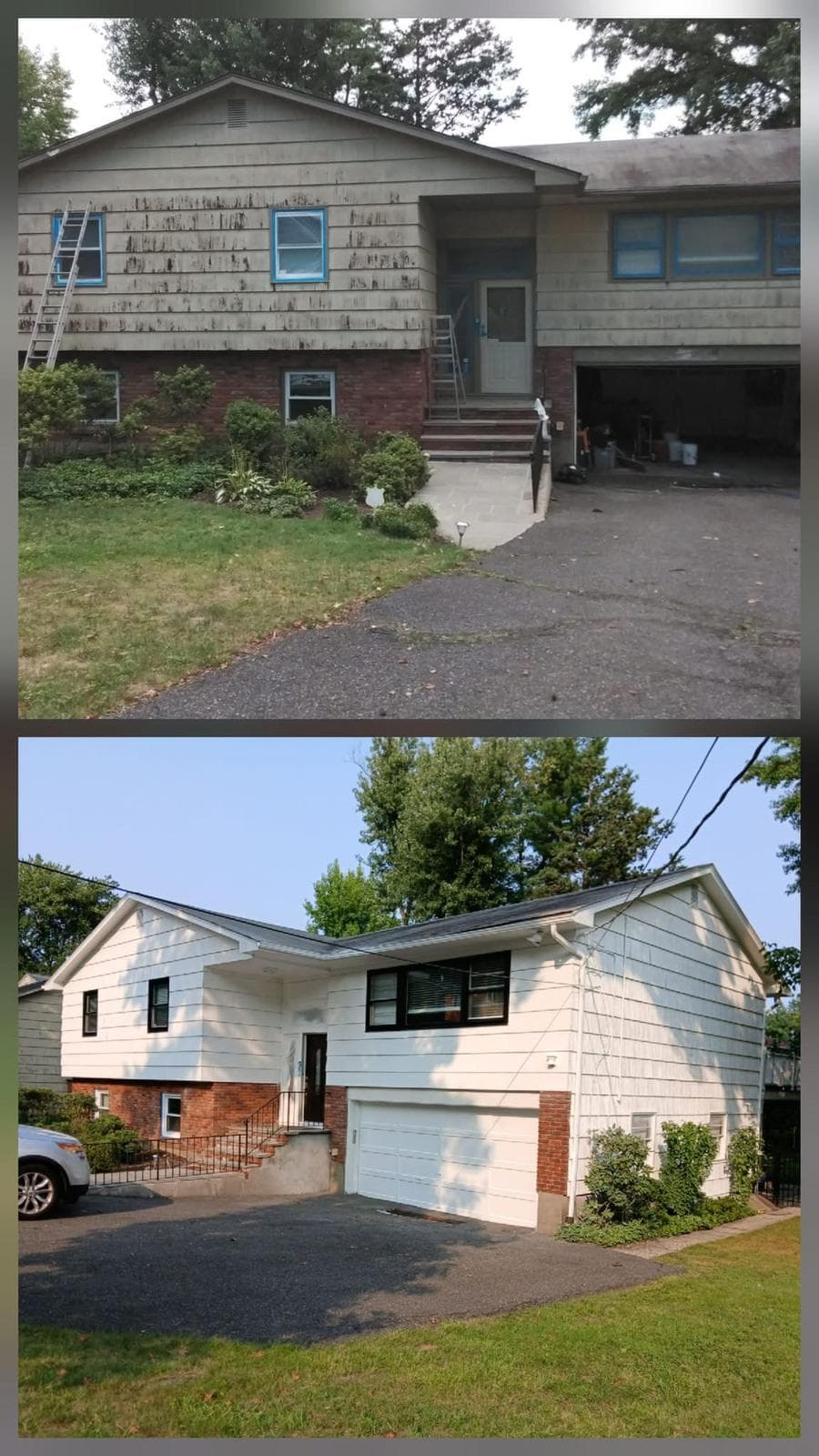
Choosing exterior paint colors in Florida involves considerations beyond personal preference. The intense sunlight, surrounding landscape, and architectural style all influence how colors appear and perform on your home. Light colors reflect more solar radiation and help keep your home cooler, reducing air conditioning costs. Whites, light grays, pale blues, soft beiges, and light tans are practical and popular choices for Florida home bodies. These colors also tend to fade less visibly under UV exposure because their lighter pigments are more stable than saturated dark colors. Dark colors absorb significantly more heat, which increases cooling costs and accelerates paint degradation. That said, dark colors are perfectly appropriate for accent elements — shutters, front doors, trim, and architectural features — where the area is small enough that heat absorption is not a concern and the visual contrast creates curb appeal. Popular exterior color schemes in Jacksonville include white or off-white body with black or dark charcoal shutters and trim for a classic, timeless look. Warm gray body with white trim and a colorful front door offers a contemporary feel. Beige or tan body with cream trim and brown accents provides a warm, traditional appearance. Coastal-inspired schemes use soft blue, sage green, or warm white bodies with white trim and natural wood or dark accent elements. When choosing colors, always view large paint samples on your actual exterior walls at different times of day. Colors appear dramatically different in direct Florida sunshine versus shade, morning light versus afternoon light, and under clear skies versus overcast conditions. What looks perfect on a small paint chip indoors can look entirely different on a large wall in full sun.
The Professional Exterior Painting Process
A professional exterior paint job follows a systematic process that ensures thorough coverage, clean lines, and lasting results. After completing all preparation work, we protect landscaping, walkways, driveways, windows, and any other surfaces not being painted with drop cloths, plastic sheeting, and careful masking. Protecting your property is just as important as the painting itself — overspray on roof tiles, driveways, or plants is unacceptable. Paint application begins with cutting in — using brushes to carefully paint all edges, corners, and detailed areas where rollers and sprayers cannot reach. This includes around windows and doors, along rooflines and fascia, and at the junction of different siding materials or colors. Cutting in is where the skill of an experienced painter is most visible. Field areas — large expanses of siding and stucco — are coated using airless sprayers for efficiency and uniform coverage, followed by back-rolling or back-brushing to work the paint into the surface texture and eliminate any holidays or thin spots. We apply two full coats of topcoat to all surfaces, allowing proper dry time between coats as specified by the paint manufacturer. Trim, shutters, doors, and accent elements receive the same two-coat treatment with the appropriate sheen and color. These elements are often a different color and sheen than the body, requiring additional masking and careful color transitions. After the final coat dries, we remove all masking and protection, inspect every surface for coverage and quality, perform any necessary touch-ups, and clean the work site thoroughly. The final walkthrough with the homeowner ensures complete satisfaction before the project is considered complete.
How Often Should You Repaint Your Home's Exterior in Florida?
The recommended repaint cycle for Florida homes depends on the substrate, paint quality, color, sun exposure, and proximity to the coast. As a general guide, these are the intervals that maintain both protection and appearance. Wood siding should be repainted every five to seven years. Wood is the most vulnerable substrate to Florida's climate and requires more frequent maintenance. South and west-facing walls receive the most sun exposure and may need attention sooner than north and east-facing walls. Stucco and masonry exteriors typically last seven to ten years between paint jobs, owing to the substrate's inherent durability and the fact that paint bonds exceptionally well to properly prepared masonry surfaces. Fiber cement siding like HardiPlank can go eight to twelve years between paintings because the substrate is dimensionally stable and does not absorb moisture the way wood does. However, the paint itself still degrades under UV exposure and eventually needs renewal. Trim and accent areas often need repainting sooner than the body because they use higher-sheen paints that show wear more visibly and because trim takes more physical abuse from weather exposure at edges and corners. Signs that your exterior needs repainting include visible chalking when you rub your hand on the surface, fading that has changed the original color, cracking or peeling paint, mildew that returns shortly after cleaning, and bare spots where paint has worn away completely. Addressing these signs promptly prevents the underlying damage that turns a straightforward repaint into a costly repair project.
Exterior Painting Costs in Jacksonville
Exterior painting costs in Jacksonville vary based on home size, surface condition, accessibility, number of stories, and the level of preparation required. A standard single-story Jacksonville home with approximately 1,500 to 2,000 square feet of living space typically represents a moderate investment for a professional two-coat exterior paint job with thorough preparation. Two-story homes cost more due to the additional square footage, height access requirements, and the scaffolding or lift equipment needed to reach upper areas safely. Homes with significant preparation needs — extensive peeling, wood rot repair, failed caulk, and heavy mildew — will cost more than homes that have been well-maintained and need only a wash, light scraping, and fresh coats. The number of colors also affects pricing. A single body color with contrasting trim is standard. Additional accent colors for shutters, doors, and architectural features add labor for the additional masking and careful application required. When comparing quotes, ensure you are comparing the same scope of work. A significantly lower bid almost always means shortcuts in preparation, fewer coats, or lower-quality paint — all of which result in premature failure and the need to repaint years earlier than a properly done job would require. The cheapest paint job is rarely the most economical in the long run.
Get a Free Exterior Painting Estimate
Your home's exterior is the first thing neighbors, guests, and potential buyers see. A fresh, professionally applied paint job transforms your home's appearance overnight while providing years of protection against Florida's demanding climate. Prenga Construction has been painting homes across Jacksonville, Orange Park, St. Augustine, Fleming Island, and Northeast Florida for over 15 years. We use premium paints from trusted manufacturers, perform thorough surface preparation, and stand behind our work with a quality guarantee. Contact us at (904) 909-0916 for a free exterior painting estimate. We will inspect your home's exterior, discuss color options, explain our process, and provide a detailed, transparent quote. Whether your home needs a complete color change or a maintenance repaint, we deliver results that protect your investment and make you proud to pull into your driveway.